Mythology Courses
Mythology courses can help you learn about ancient narratives, cultural symbolism, and the impact of myths on modern society. You can build skills in critical analysis, comparative mythology, and storytelling techniques that enhance your understanding of diverse cultures. Many courses introduce tools like literary analysis frameworks and digital resources for exploring mythological texts, allowing you to connect these skills to real-world applications in literature, art, and cultural studies.
Popular Mythology Courses and Certifications
 Status: Preview
University of Pennsylvania
Skills you'll gain: Ancient History, Art History, Liberal Arts, World History, Aesthetics, Performing Arts, European History, Ethical Standards And Conduct, Anthropology, Sociology, Psychology
University of Colorado Boulder
Skills you'll gain: World History, Research, European History, Liberal Arts, Storytelling, Culture, Language Interpretation, Translation, and Studies
 Status: Free Trial
Dartmouth College
Skills you'll gain: Storytelling, Oral Expression, Writing, Liberal Arts, Editing, Ethical Standards And Conduct, Social Studies, Aesthetics, Social Justice, World History, Art History, Writing and Editing, Culture, Cultural Diversity, Sociology, Advocacy, Political Sciences
 Status: Free Trial
Dartmouth College
Skills you'll gain: Computational Logic, Scientific Methods, Theoretical Computer Science, Logical Reasoning, Science and Research, Physics, Experimentation, Laboratory Experience, Physical Science, Deductive Reasoning, Artificial Intelligence, Computational Thinking, Mathematics and Mathematical Modeling, Simulations, Computer Science, AI literacy, Psychology, Liberal Arts, General Science and Research, Ancient History
 Status: Free Trial
University of Colorado Boulder
Skills you'll gain: digital literacy, Music, Social Media, Digital Publishing, Self-Awareness, Content Creation, World Music, Personal Development, Media and Communications, Community Outreach, Case Studies, Sociology, Culture, Diversity Awareness, Cultural Diversity, Community Development, Driving engagement, Communication, Analysis, Writing
 Status: Preview
University of Pennsylvania
Skills you'll gain: Ancient History, Art History, Anthropology, Social Studies, Timelines, World History, Public History, Liberal Arts, Writing
What brings you to Coursera today?
 Status: Preview
Universitat de Barcelona
Skills you'll gain: Legal Research, European History, World History, Social Studies, Research, Cultural Diversity, Liberal Arts, Science and Research, Anthropology
 Status: Free Trial
Dartmouth College
Skills you'll gain: Scientific Methods, Science and Research, Physics, Laboratory Experience, Physical Science, Experimentation, Liberal Arts, Ancient History, Vibrations, Mechanics, World History, European History, electromagnetics
 Status: Preview
The University of Notre Dame
Skills you'll gain: Ancient History, Culture, World History, Research, Cultural Diversity, Liberal Arts, Political Sciences
 Status: Preview
Wesleyan University
Skills you'll gain: Ancient History, European History, World History, Art History, Liberal Arts, Social Studies, Political Sciences, Anthropology, Governance
 Status: Preview
University of Geneva
Skills you'll gain: Ancient History, Art History, European History, Culture, Liberal Arts, Timelines, Case Studies, Visual Storytelling
 Status: Preview
The University of Edinburgh
Skills you'll gain: Liberal Arts, Research, Discussion Facilitation, Scientific Methods, Social Sciences, Cultural Diversity, Psychology, Sociology
In summary, here are 10 of our most popular mythology courses
- Greek and Roman Mythology: University of Pennsylvania
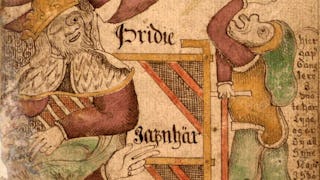
- Old Norse Mythology in the Sources: University of Colorado Boulder
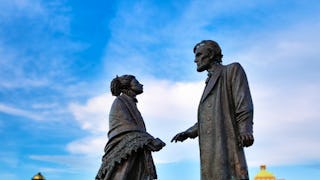
- American Renaissance: Classic Literature of the 19th Century: Dartmouth College
- Question Reality! Science, philosophy, a search for meaning: Dartmouth College
- Fandom and Popular Culture in the Digital Age: University of Colorado Boulder
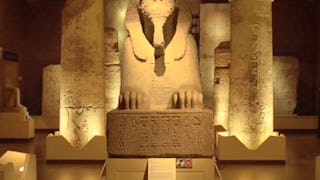
- Introduction to Ancient Egypt and Its Civilization: University of Pennsylvania
- Magic in the Middle Ages: Universitat de Barcelona
- Question Reality: Cosmos: Dartmouth College
- Sacred Texts in Dialogue: Exploring the Bible and the Qur'an: The University of Notre Dame
- The Ancient Greeks: Wesleyan University










